
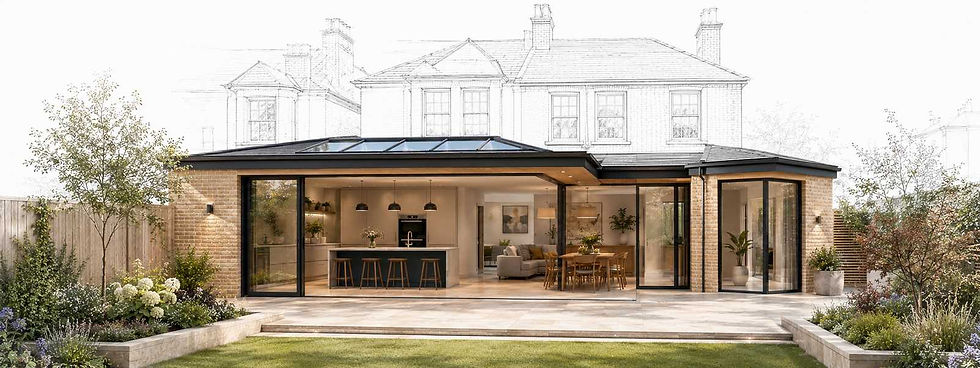
Rear House Extensions: Design Ideas, Roof Styles and Patio Planning
Explore the most popular rear-extension layouts, roof styles, glazing options and patio-design details to create a brighter, more spacious home with a seamless connection to the garden.
Rear house extensions remain one of the most popular ways to improve a home.
They can provide the additional space needed for a larger kitchen, dining room, family area or open-plan living space without dramatically changing the overall character of the property.
A well-designed rear extension can transform the way a home is used. It can bring natural light into the centre of the house, improve the relationship between the kitchen and garden, and create a more relaxed space for everyday family life and entertaining.
However, the most successful rear extensions are rarely designed as an isolated box added to the back of a house. The roof shape, glazing, doors, internal layout, garden levels and patio materials all need to be considered together from the start.
Why Are Rear Extensions So Popular?
Many Victorian, Edwardian and inter-war homes have relatively small kitchens located at the rear of the property. The dining room may be separate, the garden may feel disconnected from the house, and the existing layout may not reflect the way modern families live.
A rear extension can address several of these issues at the same time.
Depending on the size and layout of the property, a rear extension may be used to create:
-
A larger kitchen and dining room
-
An open-plan kitchen, dining and family area
-
A separate utility room
-
A downstairs WC or shower room
-
A home office or study area
-
A more direct connection between the house and garden
-
Additional space for entertaining
-
Better natural light within the original house
Even a relatively modest extension can make a significant difference when the internal layout is carefully planned.
Rear Extensions Can Be Designed in Many Different Ways
There is no single formula for a successful rear extension.
Some homeowners want a contemporary addition with large areas of glass and minimal detailing. Others want the extension to feel more traditional and sympathetic to the original house.
The best solution will depend on the style of the property, the available budget, the garden levels, the orientation of the house and how the new room will be used.
The roof design is often one of the first decisions to consider.
Flat-Roof Rear Extensions with Roof Lanterns
One of the most popular designs is a flat-roof rear extension with a central roof lantern or one or more rooflights.
This arrangement works particularly well for kitchen-diner extensions because it allows the extension to have a clean, simple appearance while bringing natural light into the middle of the new space.
A roof lantern can add height, character and a sense of openness. It can also create a natural focal point above a dining table, kitchen island or seating area.
Flat roofs can also provide practical design flexibility. They may allow for a shallow projecting canopy above the garden doors, which can help blur the boundary between the extension and the patio.
A well-proportioned flat-roof extension does not need to look plain. The roof lantern, fascia details, external materials, glazing arrangement and garden landscaping can all contribute to the finished appearance.
Pitched-Roof Rear Extensions
A pitched roof can be a good option where a more traditional appearance is preferred.
This style may suit cottages, period houses, detached homes and properties where the extension needs to feel closely connected to the original building.
Pitched roofs can be finished with roof tiles or slates that complement the existing house. Rooflights can be added where additional daylight is required.
Internally, the ceiling may follow the line of the roof to create a more generous feeling of height.
Gable Roofs and Vaulted Ceilings
A gable-fronted rear extension can create a striking architectural feature, particularly when combined with floor-to-ceiling glazing.
From inside the extension, a vaulted ceiling can make the room feel substantially larger and more dramatic. Exposed beams, carefully positioned lighting and tall glazed doors can further enhance the effect.
A gable design can work especially well on detached houses, bungalows and larger suburban properties. It may also suit homes where the garden elevation benefits from a stronger visual feature rather than a simple rectangular extension.


Choosing the Right Doors
The doors facing the garden are one of the most important design decisions.
They influence the amount of daylight entering the room, the view of the garden and the way the extension feels when the doors are open during the warmer months.
Bi-fold Doors
Full-width bi-fold doors remain a popular choice because they can open up a large proportion of the rear elevation.
When folded back, they can create a strong connection between the kitchen or family room and the patio.
Bi-fold doors tend to work particularly well where homeowners regularly entertain, where children move between the house and garden, or where the patio becomes an outdoor dining area during the summer.
Sliding Doors
Sliding doors can offer a more minimal appearance.
They typically provide larger individual glass panels and fewer vertical frames than bi-fold doors, which can improve the uninterrupted view of the garden when the doors are closed.
Slim-framed sliding doors can look particularly effective in contemporary extensions and may help the garden feel visually closer to the house throughout the year.
French Doors and Sidelights
French doors remain a practical and attractive option, particularly where the budget needs to be managed carefully.
One popular arrangement is to use two sets of French doors, possibly with glazed sidelights. This can provide a balanced and traditional appearance while still bringing plenty of light into the room.
French doors can suit period properties extremely well and may cost less than a full-width bi-fold or sliding-door system.
Crittall-Style Doors
Black-framed Crittall-style doors are frequently requested and can look excellent when used carefully.
They work particularly well when the glazing extends from floor to ceiling. The slim black frames create a strong architectural feature and can suit both period properties and more contemporary interiors.
Crittall-style doors can also be used internally to divide spaces without blocking light. For example, they may separate a front reception room from a kitchen-diner while maintaining a sense of openness.
Do Not Treat the Patio as an Afterthought
One of the most commonly overlooked aspects of a rear extension is the patio.
Homeowners understandably focus on the kitchen layout, doors, roof lanterns and internal finishes. The garden landscaping is often left until much later.
However, from a design perspective, the patio should be considered at the same time as the extension.
The relationship between the internal floor level and the external patio level has a major impact on how the completed space feels.
Where practical, the patio should be designed so that it sits close to the internal floor level. This helps create a more natural transition between the house and garden.
Changes in level, drainage requirements and damp-proofing details must be carefully resolved, but the visual effect can be exceptional when it is handled correctly.
Using the Same Flooring Inside and Outside
One of the most effective design techniques is to use visually matching flooring materials inside the extension and on the external patio.
Limestone, porcelain tiles and other stone-effect materials are often used for this purpose. The internal and external products may need different finishes to provide the appropriate slip resistance and weather performance, but they can be selected to look almost identical.
When the floor appears to continue through the glazed doors and onto the patio, the extension feels larger and more connected to the garden.
This effect works particularly well with:
-
Wide sliding doors
-
Full-width bi-fold doors
-
Recessed door tracks
-
A level or near-level threshold
-
A carefully designed patio
-
A shallow roof projection or canopy
When these details are combined successfully, the distinction between inside and outside becomes much less obvious.
The kitchen-diner, patio and garden begin to feel like one continuous space.
Recessed Door Tracks and Level Thresholds
A recessed door track can significantly improve the finish of a rear extension.
Instead of stepping over a raised frame at the bottom of the doors, the track is designed to sit close to the finished floor level.
This creates a smoother transition between the extension and the patio.
It is important that the technical details are considered properly. Drainage channels, damp-proofing, external falls and weather protection all need careful thought.
This is one of the reasons why the patio and door system should not be decided at the end of the project.
Adding a Canopy or Roof Projection
A small roof projection or canopy above the rear doors can be a valuable design feature.
It can provide some shelter from light rain, help shade the glazing during the warmer months and create a stronger relationship between the extension and the patio.
The canopy does not necessarily need to be large. Even a modest projection can create a more considered and architectural appearance.
Lighting can also be incorporated beneath the canopy to make the patio more usable in the evenings.
Think Beyond the Extension Itself
A rear extension creates an opportunity to rethink the whole ground floor.
Rather than simply making the kitchen larger, it is worth considering how the original rooms will work once the extension has been added.
Questions to consider include:
-
Should the original dining room become part of the kitchen?
-
Could a utility room be added to reduce clutter?
-
Is there space for a downstairs WC?
-
Would a separate front reception room still be useful?
-
Where should the kitchen island be positioned?
-
How will furniture be arranged?
-
Where will natural light reach during the day?
-
Will the extension improve circulation through the house?
-
How will the patio be used for outdoor dining and entertaining?
A successful extension should improve the entire ground-floor layout, not simply add square metres.
Rear Extensions for Period Homes
Victorian and Edwardian properties often benefit greatly from rear extensions.
These homes were not generally designed around large open-plan kitchens or direct access to the garden. A carefully designed extension can modernise the way the house is used while retaining the best features of the original building.
Some homeowners prefer a clear contrast between old and new, with slim-framed doors, roof lanterns and contemporary finishes.
Others prefer a softer approach using brickwork, timber, pitched roofs or more traditional French doors.
Neither approach is automatically better. The design should suit the individual house and the homeowner’s priorities.
Planning Permission and Building Regulations
Some rear extensions may be possible under permitted development rights, while others will require a planning application.
The position depends on factors such as the size and height of the proposed extension, the type of property, previous extensions, local planning constraints and whether the property is located in a conservation area.
Even where planning permission is not required, it may still be sensible to obtain formal confirmation before starting work.
Building Regulations approval will normally be required for the construction work. Structural design may also be needed where walls are removed, steel beams are introduced or large door openings are created.
Party wall procedures may apply where excavation or building work takes place close to neighbouring properties or the shared boundary.
Getting Quotations from Builders
Builders can provide more reliable quotations when the project is properly defined.
A clear design package should show the proposed layout, dimensions, roof form, doors, windows and the main architectural details.
For more detailed quotations, it may also be helpful to have Building Regulations drawings and structural information available.
This reduces the risk of misunderstandings and makes it easier to compare quotations on a like-for-like basis.
Finding the Right Professionals
A rear extension may involve several different professionals and trades, including:
-
Architectural designers
-
Planning consultants
-
Building Regulations designers
-
Structural engineers
-
Building Control professionals or approved inspectors
-
Party wall surveyors
-
Builders
-
Glazing specialists
-
Rooflight and roof-lantern suppliers
-
Kitchen designers
-
Patio and landscaping contractors
-
Electricians, plumbers and heating engineers
The Architectural Partner Network (APN) helps homeowners access vetted and approved professionals for different stages of their projects.
Whether you are at the early ideas stage, preparing for planning, comparing builder quotations or already part-way through a build, the right advice can help you make better decisions and avoid costly mistakes.
Tell Us About Your Rear Extension
Every property is different.
You may already know exactly what you want, or you may still be deciding between a flat roof, pitched roof, roof lantern, sliding doors, bi-fold doors or a more traditional arrangement.
Tell us a little about your property, your ideas and the stage you have reached. We can help point you towards the most appropriate professionals for the next step.
